

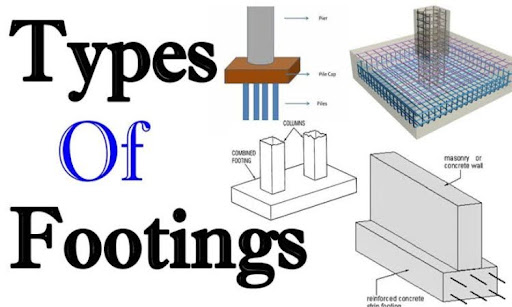
Foundation, though cannot be seen after the completion of the building, is an important part of the building. The stronger the foundation, the stronger the building will be. The foundation resists the complete weight of the building. Footings are the main part of the foundation. There are different kinds of footings.
This article helps you understand types of footings in building construction explained with examples.
What Is Footing?
Footing is one of the main components of a building and it transforms the load of a building to the soil. It equally shares the weight of the building across the complete span of the building, so that the building doesn’t sink underground. Even though footings are made of concrete, you can even use stones, bricks, and wood. The types of footings depend upon the soil condition, size and weight of your building.
Types Of Footings
There are different types of footings used in construction, depending on the building’s design and the type of soil. According to GharPedia, choosing the right type of footing is very important because it makes the building stronger and lasts longer. Knowing about each type of footing helps both builders and homeowners choose the best option when planning a building’s foundation.
- Continuous Wall Footing:
Continuous wall footing is the most commonly used footing. This type of footing supports the load-bearing walls or the walls with external lateral loads. It is also used in retaining walls.
Ex: A large, flat slab supporting a multi-story building on soft soil.
- Isolated Footing:
Isolated footing is also one of the generally used footings. It is commonly used for columns or isolated structures. It can be used in combination with continuous footing for extra support if needed.
Ex: A footing supporting a single column in a residential building and also for sheds and porches.
- Combined Footing:
This type of footing is used to support the columns that are close to each other. It equally transfers the load between the columns and prevents setting.
Ex: trapezoidal or rectangular footing supporting two columns in a multi-story building.
- Strip Footing:
This gives support to the long walls or walls that carry heavy loads. This footing equally distributes the load and prevents tripping.
Ex: A footing supporting a brick wall in a masonry structure.
- Strap Footing:
This type of footing supports the walls that are not perpendicular to the ground. It can resist external loads and prevent the tipping of walls.
Ex: It is used in load-bearing walls, residential buildings, basements, commercial buildings, retaining walls, sloping sites, and high-rise buildings.
- Raft Footing:
This type of footing supports larger areas of a building. This shares the load equally and reduces settling.
Ex: A large, flat slab supporting a multi-story building on soft soil, and also used in large buildings, bridges, and structures with heavy loads.
- Pile Footing:
This is used in supporting buildings that are built on unstable soil. It gives stability to the structure and secures it from sinking.
Ex: Pile footings supporting a bridge on a riverbed or in a marshy area.
- Floating Footings:
This footing is used in buildings to prevent the building from frost. This can be constructed below the frost line or to insulate the structure to protect it from damage from freezing temperatures.
Ex: It is used in soft or compressible soil, areas with higher water tables, seismic zones, marine areas, landfills, or reclaimed lands.
Conclusion
The footing plays an important part in the foundation of the building. It evenly distributes the pressure exerted by the buildings to prevent them from settling. Selecting the right type of footing helps in the success of a building.
